
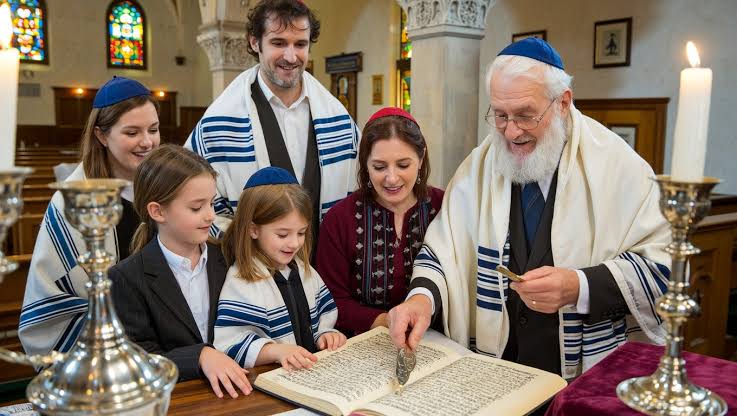
Jewish heritage is closely linked to cultural customs, religious traditions, and symbols that have been passed down through the years. Many facets of Jewish culture, such as traditional attire and characteristic hairstyles, demonstrate a deep dedication to religion and communal identity. Among these cultural components, traditional sidelocks and portraits of rabbis provide important insights into Jewish religious history. While the practice of peyes constitutes a significant religious habit followed by many Orthodox Jewish men and boys, collections of rabbis’ pictures provide a visual link to revered spiritual leaders.
The Importance Of Rabbis’ Images In History
For ages, rabbis have been vital members of Jewish communities, acting as spiritual mentors, legal authorities, and religious instructors. Their impact goes beyond religious rituals since they interpret holy books, aid in the preservation of Jewish traditions, and provide advice on day-to-day issues.
Paintings, sketches, and finally photography were used to make portraits of notable rabbis in the past. These pictures began to serve as significant reminders of both academic accomplishment and religious leadership. People may now examine how Jewish religious leaders lived, dressed, and engaged with their communities thanks to historical images.
As a sign of respect and a link to Jewish education, many families hang photographs of well-known rabbis in their homes. Younger generations may be introduced to significant religious leaders whose ideas continue to influence Jewish philosophy via such representations.
The Religious Significance Of Peyes
Maintaining sidelocks, sometimes referred to as peyes or payot, is one of the most distinctive characteristics of certain Orthodox Jewish communities. This custom is linked to a scriptural command about the hair on the sides of the head found in Leviticus 19:27.
This precept is interpreted and observed differently by different Jewish communities. While some men keep the hair around their temples reasonably short without shaving the forbidden regions, others have long, curly sidelocks.
Traditional sidelocks are very noticeable and contribute to a unique religious look in a number of Hasidic communities. But not all Orthodox Jewish men wear lengthy sidelocks, and the custom should not be generalized to all Jewish groups.
These differences show how religious practices may reflect various historical and cultural influences while retaining their fundamental meaning.
Photography As A Glimpse Into Jewish Religious Life
The variety of Jewish religious traditions may be easily understood via photography. Photographs from the community, historical portraits, and modern photos record changes in daily life, religious rituals, hairstyles, and attire.
Collections of rabbis pictures may provide helpful visual references for academics, educators, and those interested in Jewish culture. Images may show religious gatherings, ceremonial settings, traditional attire, and the unique looks connected to certain groups.
Additionally, images aid in the preservation of the memory of religious leaders who made contributions to Jewish academia and community growth. These images become more than just ornamental portraits when they are paired with precise historical details.
How Community Identity Is Reflected In Peyes
Particularly in groups that have unique religious traditions, traditional hairstyles may convey cultural affiliation. Peyes are a visible symbol of religious practice and continuity with previous generations for certain Orthodox Jewish households.
Sidelocks often have different appearances depending on community customs and family traditions. Some people tuck them behind their ears or let them dangle freely, while others wear them coiled next to their ears.
These variations highlight how diverse Orthodox Judaism is. Even though hairstyles could seem identical to outsiders, how they are presented might reveal certain traditions that have evolved throughout time.
Knowing these differences promotes a better understanding of Jewish religious identity without limiting a community to its external look.
Maintaining Jewish Traditions For Upcoming Generations
Keeping historical documents is just one part of preserving cultural heritage. Sharing customs, elucidating their meaning, and assisting younger generations in comprehending their religious and cultural heritage are all necessary.
By capturing facets of Jewish culture that may otherwise be hard to envision, photographs of rabbis, traditional hairstyles, and neighbourhood events aid in this process.
Students, historians, and families interested in learning more about Jewish customs may now more easily access these materials thanks to digital image collections. These collections may promote cultural education and foster intergenerational relationships by fusing historical photographs with trustworthy interpretations.
Conclusion
Jewish heritage is built on centuries of religious learning, cultural expression, and communal customs. While traditional peyes show how religious traditions continue to define individual and collective identity, rabbis’ pictures preserve the memory of significant spiritual leaders. When combined, these artistic and cultural components provide significant opportunities to learn about Jewish history, recognize its variety, and comprehend the need to keep customs alive for future generations.
