
A bespoke ring is more than jewellery — it’s a story made tangible. Unlike a piece chosen from a display, a custom ring carries the personal vision of its wearer, shaped through creativity, craftsmanship, and emotion. From the first sketch to the final polish, every stage in the bespoke journey reflects the harmony between imagination and artistry.
1. The Inspiration Stage
Every custom ring begins with an idea. Sometimes it’s a design inspired by a moment — an engagement, an anniversary, or a personal milestone. Other times, it’s sparked by a specific stone or a family heirloom waiting to be reimagined. The goal at this stage is clarity: defining what the wearer truly wants the ring to express. Whether minimalist, vintage-inspired, or bold and sculptural, the initial vision sets the creative direction.
2. The Consultation
A bespoke process usually begins with a detailed consultation between the designer and client. This conversation explores aesthetic preferences, lifestyle, and budget. It’s also where technical details are discussed: metal choice, stone options, and ring proportions. The best designers guide clients through what’s feasible — ensuring comfort, balance, and long-term durability while still honouring personal taste.
3. The Sketch and Design Phase
Once ideas are refined, the concept takes visual form. Designers may create hand-drawn sketches or 3D computer models to illustrate the ring from every angle. This stage brings creativity and precision together. The sketch becomes a blueprint, helping clients visualize the finished piece and make adjustments before production begins. It’s the moment where imagination transforms into structure.
4. Selecting the Gemstones
Choosing the right gemstone is one of the most exciting parts of the journey. Each gem carries its own personality — colour, brilliance, and symbolism. For engagement rings, diamonds remain classic, but coloured stones like sapphires, spinels, and tourmalines are increasingly popular for their individuality. The stone’s cut, clarity, and size all influence the design’s final balance. Sometimes a unique gem even dictates the entire direction of the ring.
5. Crafting and Setting
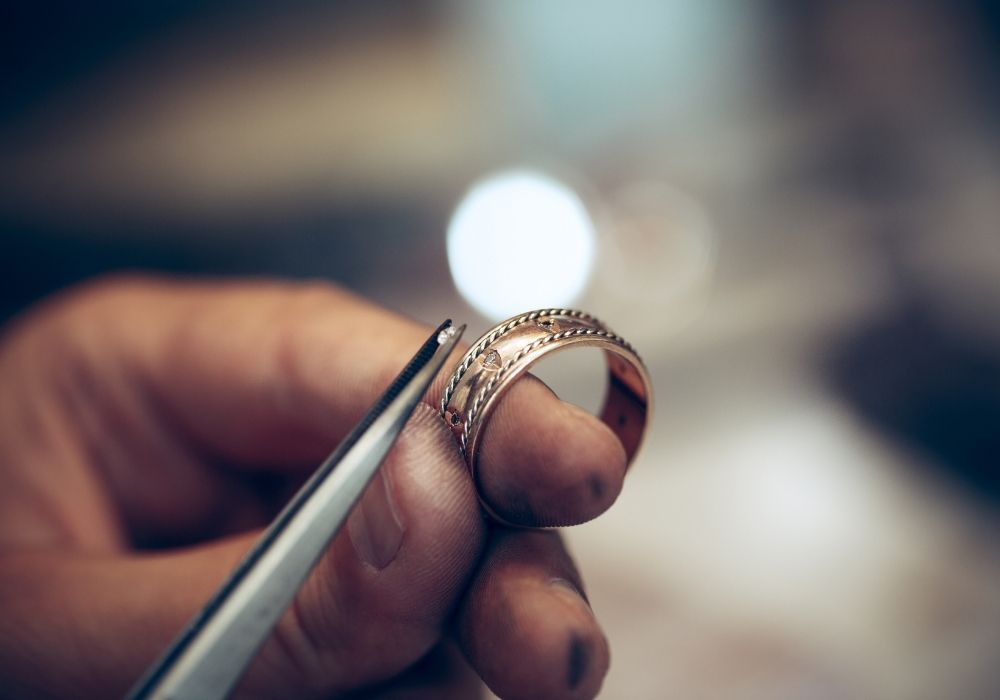
This is where artistry meets skill. Expert jewellers transform raw materials into form, handcrafting the metal, setting the stones, and refining every detail. Traditional techniques like hand-carving, soldering, and polishing remain at the heart of fine jewellery, even in an age of digital design. It’s an intricate process requiring patience, precision, and a trained eye for symmetry and finish.
6. The Final Polish
When the ring is complete, it’s cleaned, polished, and inspected to ensure perfection. What began as a concept is now a lasting creation — a piece that embodies both personal sentiment and timeless beauty.
