
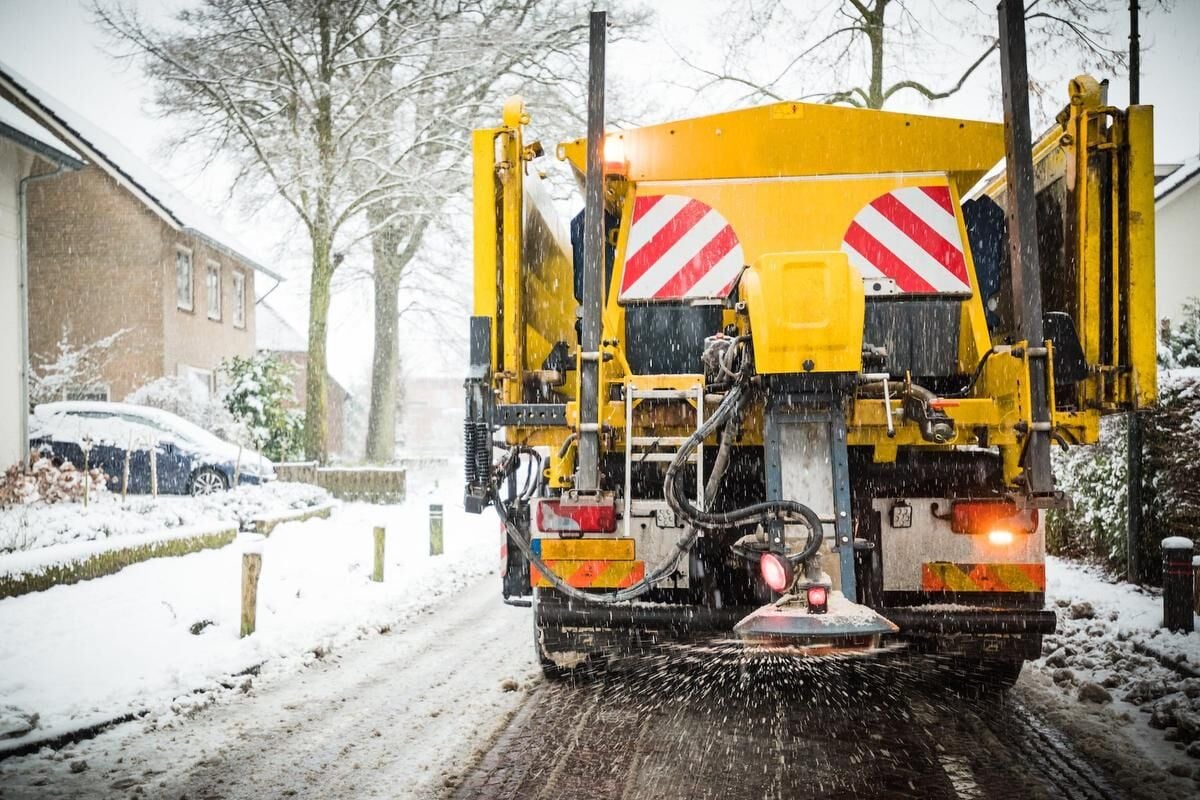
Winter roads can quickly turn treacherous when snow and ice accumulate, making safe travel a challenge. Salt Spreader play a crucial role in combating these hazards, ensuring roads remain navigable and reducing the risk of accidents. These machines efficiently distribute salt and other de-icing materials, helping to melt ice and improve traction for vehicles.
Understanding how salt spreaders work sheds light on their importance in maintaining road safety during harsh winter conditions. From their design to their functionality, these tools are essential for keeping streets, highways, and parking lots safe for drivers. Their effectiveness can make all the difference when winter weather strikes.
The Science Behind How Salt Spreaders Melt Ice Efficiently
Salt spreaders disperse granular salt onto icy surfaces, enabling rapid melting through a chemical reaction. Sodium chloride (NaCl), the primary de-icing agent, reduces the freezing point of water. This phenomenon, known as freezing point depression, causes ice to transform into liquid at temperatures as low as 15°F (-9°C).
Effective distribution is critical for maximum efficiency. Spreaders ensure an even application, preventing excessive use that could harm the environment. Auger systems and spinner mechanisms in the spreaders regulate flow rates and coverage patterns, optimizing the salt’s melting action.
Moisture plays a key role in activation. When salt contacts ice or snow, it draws moisture to dissolve and form a brine. This brine breaks the ice’s bond with the road surface, allowing easier removal by plows or vehicles.
Modern salt spreader technology increases productivity. Advanced models integrate sensors and GPS systems to adjust application rates based on road conditions. These features conserve salt resources while improving the safety and traction of treated surfaces.
Different Types of Salt Spreaders and Their Applications
Walk-Behind Spreaders
Walk-behind spreaders are ideal for small-scale applications, such as sidewalks and driveways. These spreaders use a manual push mechanism to distribute salt evenly. They are lightweight and easy to maneuver, making them suitable for personal or residential use. Homeowners often rely on walk-behind models for targeted ice control in smaller areas.
Tailgate Spreaders
Tailgate spreaders attach to the rear of vehicles like trucks or utility vehicles. These are designed for medium-scale applications, such as parking lots or community roads. Tailgate spreaders utilize hopper systems to store salt and spinner mechanisms for controlled dispersion. Municipalities and facility managers commonly use these models for efficient road clearing in urban or suburban settings.
Hopper Spreaders
Hopper spreaders, mounted on trucks or flatbeds, handle larger-scale operations. These spreaders feature higher capacities and more powerful distribution systems, covering long stretches of highways or major roads. Often used by city or state maintenance departments, hopper spreaders are crucial for clearing heavy snow and ice accumulation during severe winter events.
Broadcast Spreaders
Broadcast spreaders are versatile devices used for spreading de-icing materials over broader areas. These spreaders can be vehicle-mounted or handheld and are favored for evenly distributing salt over lawns, large driveways, or roads. Their settings allow for controlled spread radius, reducing waste and environmental impact.
Liquid Brine Spreaders
Liquid brine spreaders distribute pre-wetted salt solutions or brine mixtures. These are effective for preventing snow and ice from bonding to road surfaces. Commonly employed by transportation agencies, liquid brine spreaders offer proactive solutions for winter maintenance. By applying brine before storms, these systems enhance safety and reduce overall salt consumption.
Drop Spreaders
Drop spreaders ensure precise salt application, making them ideal for areas requiring controlled coverage. These spreaders release salt directly beneath the equipment, preventing over-scattering. Suitable for narrower spaces like walkways or driveways, drop spreaders provide consistent layering to prevent ice formation.
Underbody Spreaders
Underbody spreaders, mounted beneath trucks, allow for real-time salt dispersal while driving over affected areas. They are specifically engineered for heavy-duty road maintenance, such as highways or interstates. These spreaders often feature automated controls, enabling operators to adjust application rates during operation.
Specialty Spreaders
Specialty spreaders are designed for non-traditional applications, such as airport runways or industrial areas. Built to address specific needs, they may distribute unique de-icers or chemicals beyond road salt. These spreaders integrate advanced technologies to ensure precision and efficiency under challenging conditions.
Salt spreaders, encompassing a variety of types, play essential roles across residential, commercial, and public sectors. For more detailed information, refer to trusted resources or visit a specialized website featuring in-depth guides on winter maintenance equipment.
How to Properly Calibrate a Salt Spreader for Even Distribution
Proper calibration ensures that a salt spreader distributes material evenly and efficiently. Incorrect calibration leads to under-application, reducing effectiveness, or over-application, which wastes resources and harms the environment. By following precise steps, operators can optimize performance.
Steps for Calibration:
- Inspect the spreader: Confirm that all mechanical parts, such as augers and spinners, are functional and free of debris. Any obstruction could affect the flow rate.
- Determine application rate: Reference the manufacturer’s guidelines to identify the optimal material discharge based on road conditions and vehicle speed.
- Weigh test runs: Fill the spreader with a known weight of salt, then run it at a set speed over a measured area. Collect the dispensed material and weigh it to calculate the output rate.
- Adjust settings: Modify the spreader’s gate openings, auger speed, or spinner velocity to match the desired application rate calculated during the test.
- Repeat for accuracy: Re-test to ensure settings consistently produce even distribution across the target area.
Importance of Calibration:
A calibrated salt spreader ensures uniform application, reducing material waste while increasing road safety. It enables precise coverage, avoiding over-salting near sensitive vegetation or under-salting in high-risk zones. Regular calibration checks are essential, especially when switching between different de-icing materials.
Salt spreaders are integral to maintaining safe roads, and proper calibration optimizes their function. Users can find additional resources by visiting a reliable website or checking the manufacturer’s toolkits for calibration guidelines.
Environmental Considerations When Using Salt Spreaders
Efforts to minimize the environmental impact of salt spreaders focus on reducing overuse and contamination risks. Sodium chloride (salt) can harm soil, vegetation, and aquatic ecosystems if excessive amounts wash into surrounding areas. Proper application helps limit these effects while maintaining road safety.
Runoff from salt-treated roads contributes to waterway salinization. High salt levels can disrupt aquatic life and alter water chemistry. Precision application methods, such as calibrated spreaders and GPS-controlled systems, reduce runoff by ensuring the right amount of salt is used.
Overapplication wastes de-icing materials and increases environmental strain. Choosing spreaders like drop or liquid brine models ensures that salt is applied directly to targeted surfaces. Modern technologies, such as moisture sensors, help further optimize usage and prevent unnecessary dispersal.
Alternatives to sodium chloride, such as calcium magnesium acetate and organic-based products, provide eco-friendlier options. These reduce environmental risks but may require different equipment setups. Users can explore compatibility with their existing salt spreader models to transition to greener solutions effectively.
Proper storage of de-icing materials reduces contamination risks from accidental spills. Covered storage areas and secure containment systems prevent salt from leaching into soil or water sources. Maintaining storage best practices supports sustainable winter maintenance.
Organizations managing winter safety can visit a salt spreader manufacturer’s website to learn more about environmentally conscious products and innovations. This ensures informed decisions that balance safety with ecological responsibility.
Choosing the Right Salt Spreader for Residential and Commercial Use
Salt spreaders are indispensable tools for maintaining safe, ice-free surfaces during winter. Selecting the right type depends on the scale of application, road conditions, and specific needs. Whether it’s a walk-behind spreader for small driveways or a hopper spreader for large highways, understanding their features and functionality ensures efficient and effective winter road maintenance.
Advancements in technology and eco-friendly alternatives continue to improve the performance and sustainability of salt spreaders. By prioritizing proper calibration, precision application, and environmentally conscious practices, individuals and organizations can enhance safety while minimizing their ecological footprint.
